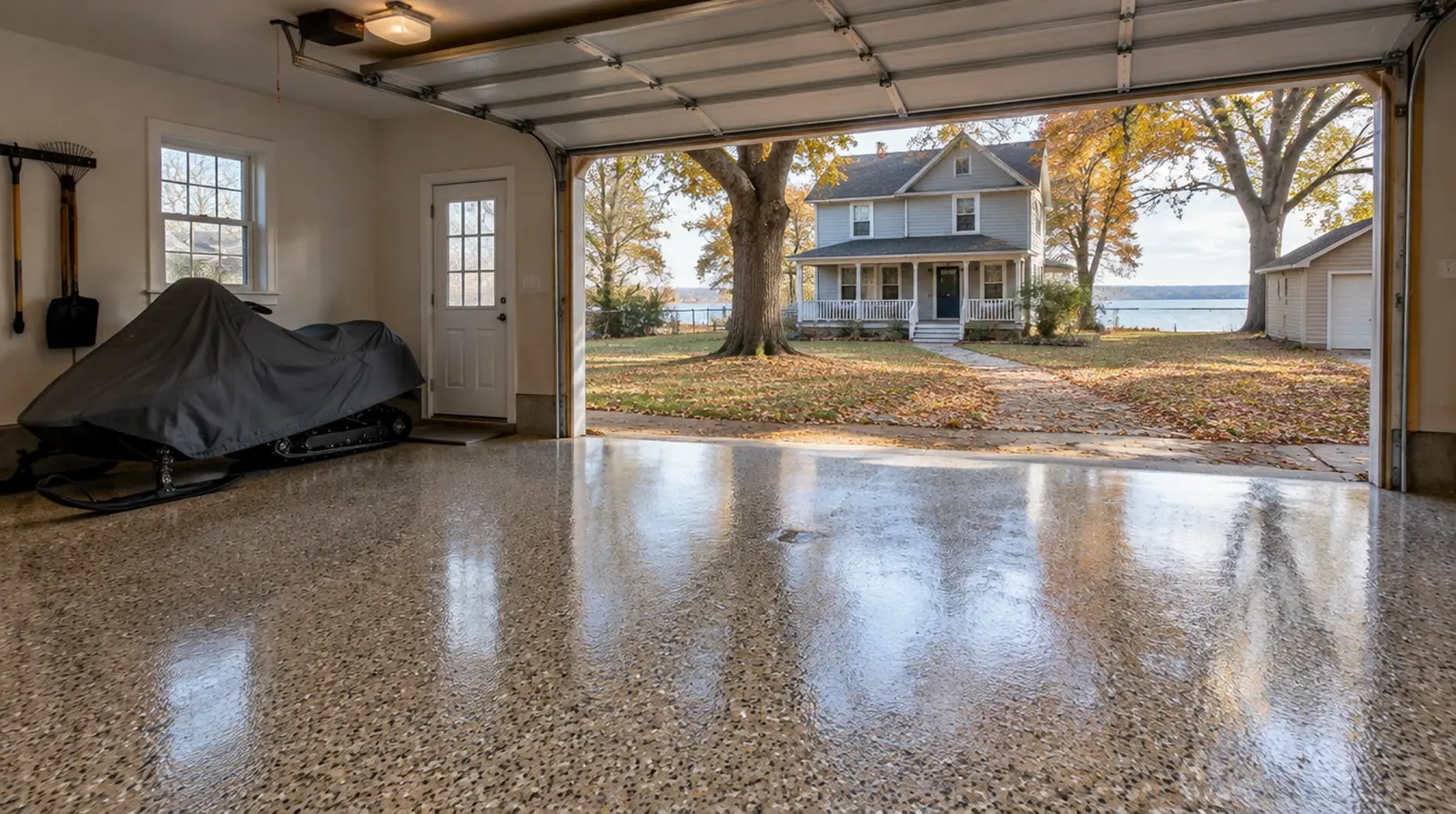
What a flake floor is
A flake floor starts with the same ground and repaired slab as any epoxy garage. While the base coat is still wet, we broadcast decorative vinyl chips across it. In a full broadcast system the chips cover the entire surface. After the base cures, we scrape and vacuum off the loose chips, which leaves a textured surface, and seal it with a clear topcoat. The result looks a bit like granite and feels slightly textured underfoot.
Why it works in this climate
Winters bring sand, salt and brine into every garage and entryway. A solid color floor shows every streak and water spot, while flake disguises them between cleanings. The texture also gives grip to wet boots and to anyone walking around a dripping snowmobile or boat. In summer, when the garage is a workshop, flake hides sawdust and small scuffs.
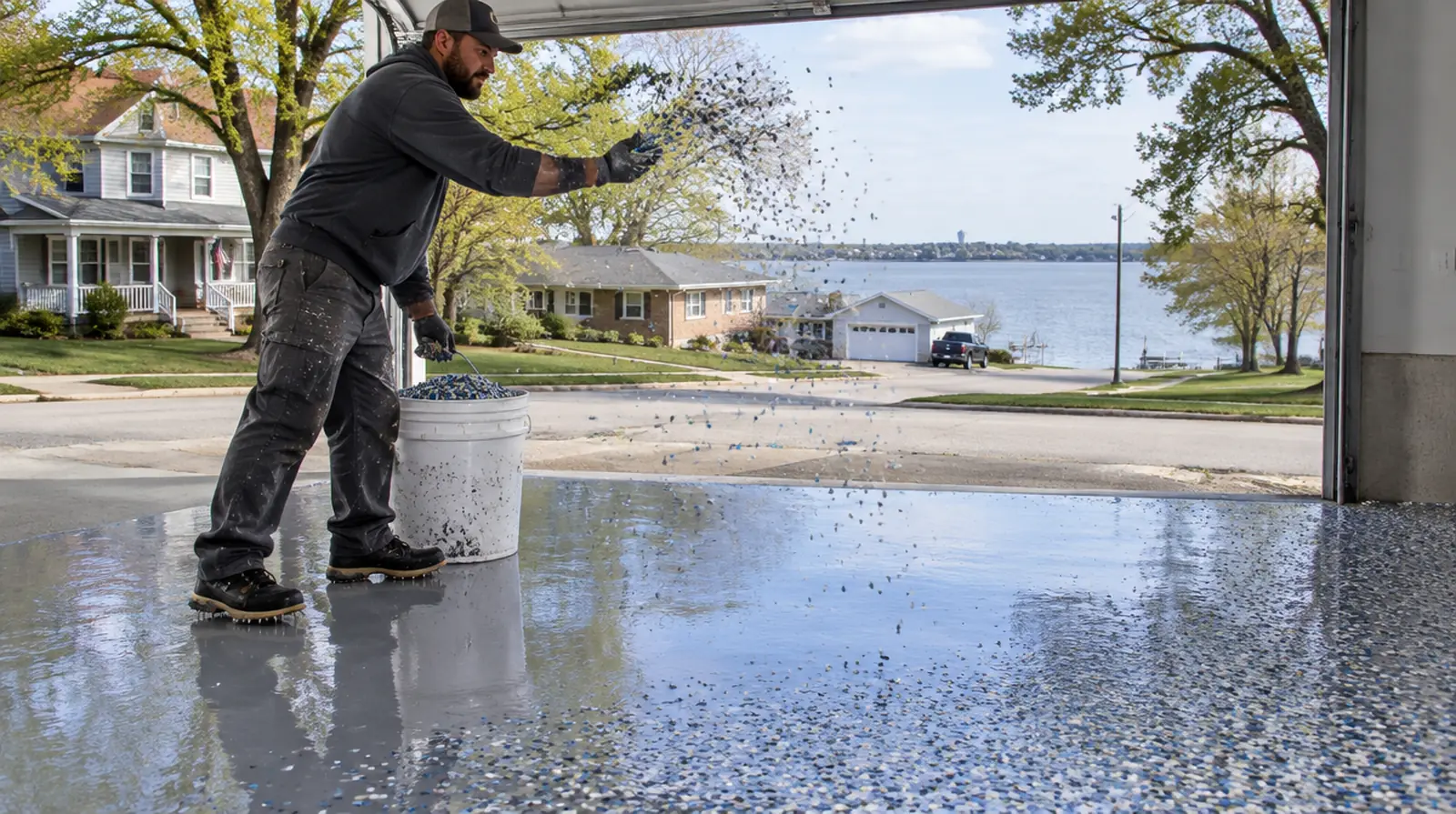
Our process
- Grind. The slab is diamond ground with dust control to open the surface and remove contaminants.
- Repair. Cracks, pits and scaling are filled and ground flat.
- Base coat. A pigmented epoxy or polyaspartic base goes down in a color that complements the flake.
- Broadcast. Flake is thrown to refusal, meaning until the base can hold no more.
- Scrape and vacuum. Loose flake is removed, and the high points are knocked down.
- Topcoat. One or two clear coats seal the chips, set the texture and add UV and chemical resistance.
Picking colors and chip size
We bring sample boards to the estimate. Tans and browns pair well with wood trim and earth tones and hide sand. Grays and blacks look sharp next to dark cabinets. Larger chips look bolder and hide more, while smaller chips look tighter and more refined. Ask to see how the samples look in your own light before choosing.
Adjusting texture
A full broadcast floor is naturally textured. If you want it smoother for easy mopping, we add an extra topcoat. If you want more grip near a door or on a ramp, we add aggregate to the final coat in those areas only.
Where flake makes sense
- Two- and three-car garages that hold trucks, trailers and outdoor gear
- Mudrooms and back entries where boots pile up
- Basement utility rooms and laundry areas
- Workshops, pole sheds and hobby spaces
Durability
The chips add thickness, which means a flake floor typically handles impact and abrasion better than a thin solid coat. The clear topcoat protects against oil, gasoline, de-icer and lawn chemicals. With basic care, a flake floor stays good looking for many years.
Pairing with polyaspartic
Many of our flake floors use a polyaspartic topcoat. It cures fast, holds its color in sunlight and stands up to hot tires. Some homeowners prefer an all-polyaspartic system for a one-day install. We will explain the tradeoffs at the estimate.
Living with a flake floor
Day to day, a flake floor asks very little of you. Leaf debris and sand that blow in during fall do not stand out against the chips. Ice-fishing gear and wet coolers can sit on it without leaving marks. When you want a deep clean, a hose, a soft deck brush and a bucket of mild soap handle almost anything.
Is a flake floor hard to clean?
No. Sweep, then mop or hose it off. The topcoat seals the chips so dirt does not lodge between them.
Will the chips come loose?
No. They are locked into the base and sealed under the topcoat.
Can a flake floor go in a basement?
Yes. We test moisture first and use a moisture-tolerant primer if needed.
How long does it take?
One to two days for most garages, depending on the system.
See samples in person
We will bring chip samples, measure your space and give you a written quote. Contact us to schedule.
to see flake samples and get a quote.
Call (920) 289-4844 for a free estimate.