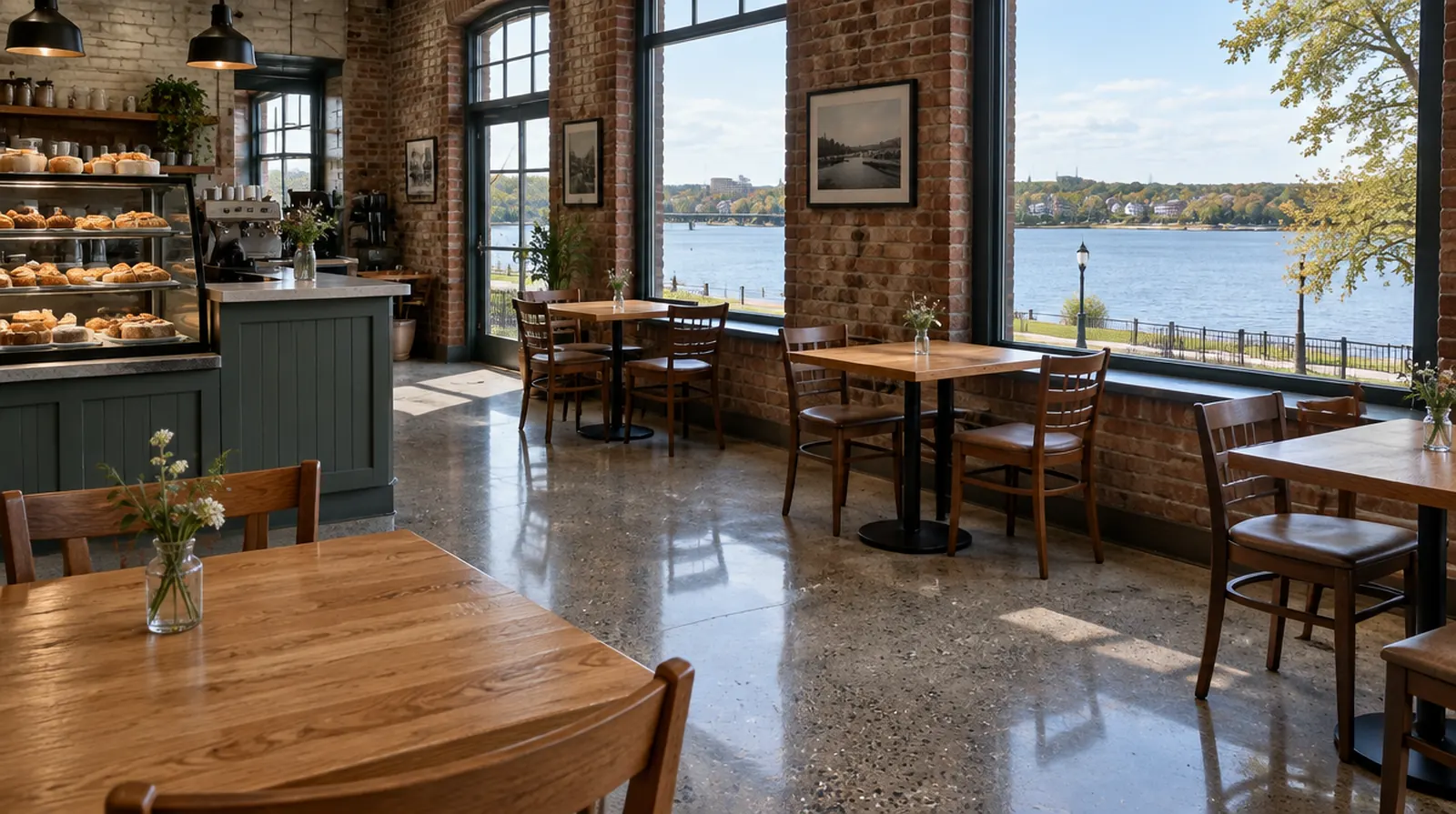
How polishing works
Polished concrete is not a coating. We grind the slab with a series of progressively finer diamond tools, starting coarse to remove the surface and finishing with very fine grits that create the shine. Along the way we apply a densifier, which reacts with the concrete to harden it, and finish with a guard that resists stains. The result is a hard, reflective floor that will not peel because there is nothing on top to peel.
Choosing a look
Polished floors are defined by two things: how much aggregate shows and how much shine you want.
- Cream finish: very little grinding, so the smooth top paste remains with little or no stone exposed.
- Salt and pepper: light grinding that reveals fine sand and small aggregate.
- Full aggregate: deeper grinding that exposes larger stones for a terrazzo-like look.
Shine ranges from satin to high gloss. We can also add dyes for color.
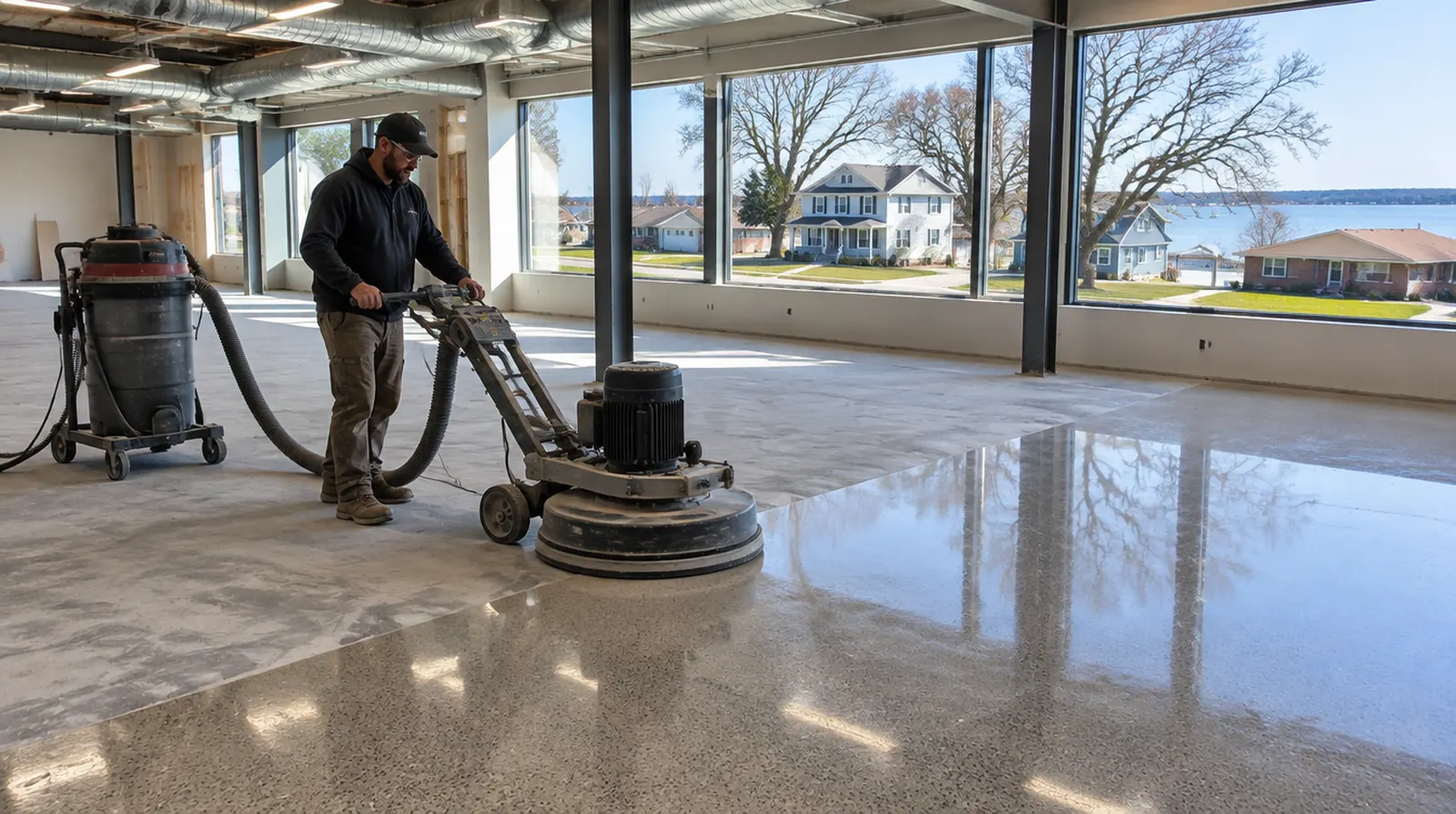
Where it fits
Polished concrete works well in offices, retail stores, restaurants, breweries, warehouses, showrooms, schools and modern homes with radiant heat. It reflects light, which can brighten a space and reduce lighting needs. It is a good fit for older commercial buildings downtown where an original slab has character worth showing.
Maintenance
Polished floors are easy to keep. Dust mop daily in commercial spaces and clean with a neutral cleaner. There is no wax to strip and no coating to recoat. Over years, high-traffic areas can be refreshed with a light polish.
Durability
Because the densifier hardens the surface, polished concrete resists abrasion and forklift traffic. It is not fully stain-proof, so acidic spills like wine, vinegar or citrus should be wiped up promptly. Our stain guard adds protection.
What about garages?
We generally do not recommend polished concrete for garages that see winter salt. Salt and brine can still affect the concrete, and a polished floor can be slick when wet. For garages, a coating is usually the better choice.
New and existing slabs
Existing slabs can often be polished, though repairs, patches and old adhesive will show. We assess the slab before quoting and explain what you can expect. On new construction, we can coordinate with your concrete contractor for the best result.
Cost factors
Price depends on the square footage, the condition of the slab, how deep we grind and how high the shine. Removing old flooring or adhesive adds time. We provide a detailed written quote.
Polishing compared with coatings
Coatings add color, texture and chemical resistance on top of the slab. Polishing refines the slab itself and keeps its natural look. In a dry indoor space with heavy foot traffic, polishing often wins on lifetime cost. In a wet or chemical environment, a coating usually wins. We will recommend the option that fits how the space is used rather than the one with the bigger ticket.
Is polished concrete slippery?
When dry it has good traction. Like most hard floors, it can be slick when wet, so entrance mats help.
Can you polish a floor with cracks?
Yes. Cracks can be filled, but they will remain visible as part of the character of the slab.
How long does it take?
Small spaces can take a day or two. Larger commercial spaces take longer, depending on the finish.
See samples
We can show you examples of different finishes and assess your slab. Contact us to set up a visit.
to talk about a polished concrete floor.
Call (920) 289-4844 for a free estimate.